


Make It Leather: An Antidote to Disposable Culture
Today (29 April 2026) is World Leather Day and a good moment to step back and look at why this material has endured for centuries. Information about World Leather Day along with great leather knowledge can be found at Leather Naturally (https://www.leathernaturally.org/).
Many people are starting to question the cycle of buy, use, discard and the long-term cost that comes with it. Not just financially, but environmentally and emotionally too. In a world built on convenience, choosing something made to last has become a deliberate act.
Made to Last
Most products today are designed to be quick and cheap to manufacture and with a short lifespan in mind. They rely on aggressive marketing to imply value or prestige, but the reality is low quality goods that are quickly disposed of. Leather pushes back against that model. It costs more to produce, takes skill to work with, and lasts a lot longer than the fast-fashion cycles require.
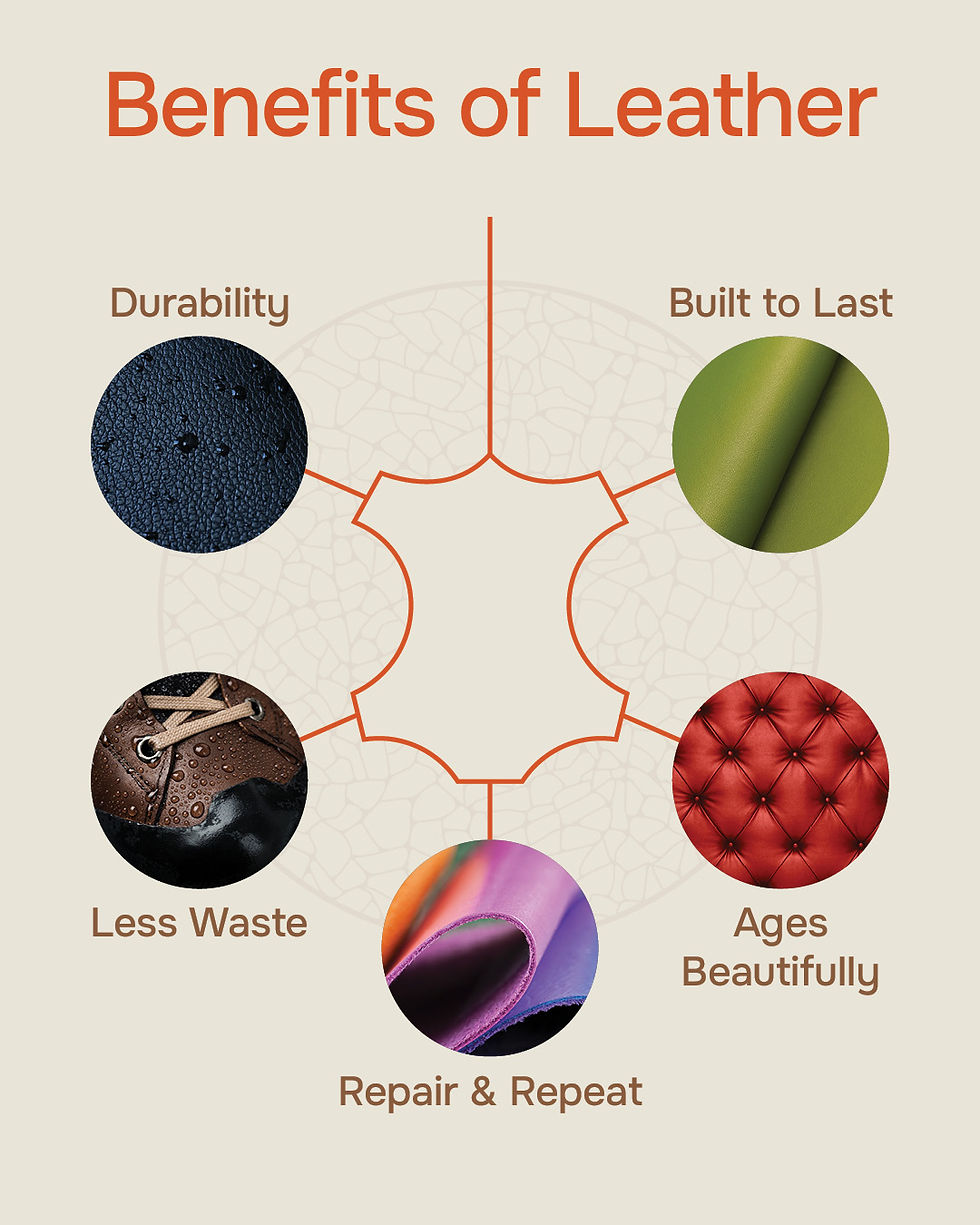
A well made leather item can outlive it’s owner and high quality leather starts to look better with age. It patinas, tells a story with the marks and scratches; it wears in not wears out. I first noticed this with my work bag. When I worked for a big corporation I carried a bag with me to work every day and it would often accompany me on various trips around the world. I’d generally buy a fairly cheap one and would usually change it every year. Something on the bag would fail, fake leather would peel and after a year of heavy use it would be shabby and falling apart. Then one year I decided to treat myself to a bag made of full-grain leather, it was expensive, a lot more than I was used to paying but I decided I wanted something “nice”. A year later the bag basically looked the same (black leather so not so much patina potential) and after 5 years I was starting to feel quite smug about the money I was saving. I’ve now had it nearly 10 years, it looks amazing and I love that I’m still using the same bag. The upfront cost to buying a good leather item is definitely higher, sometimes a lot higher, but in the end it will usually repay you many times over. Money saved on multiple repeat purchases, time that you didn’t have to spend shopping, and the shear joy of owning and using something well made and having it with you the many years and different seasons of your life.
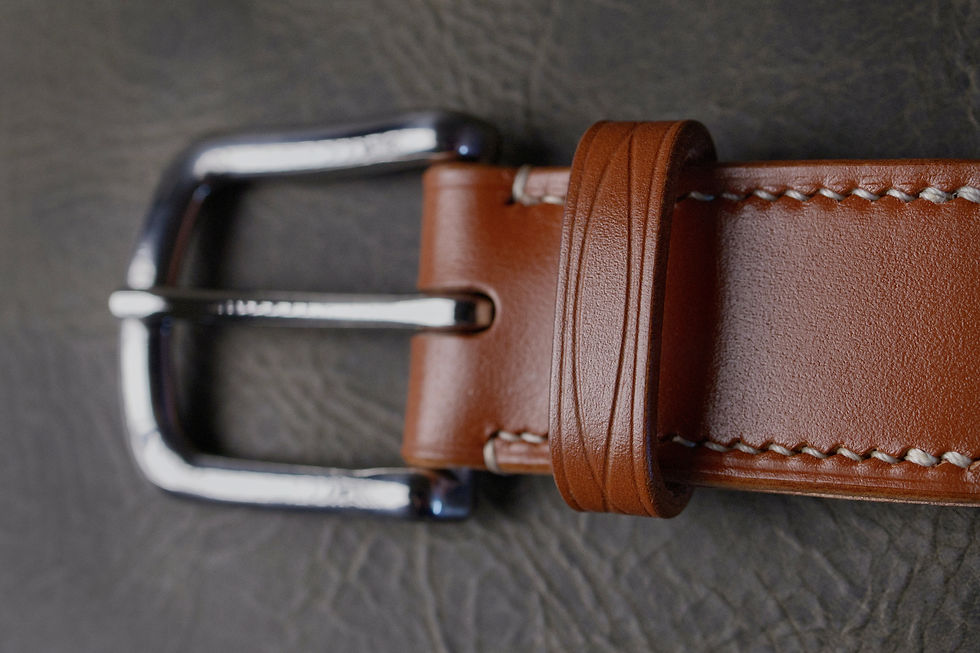
Now I’m not suggesting that leather goods, even with the best craftsmanship and highest quality full grain leather, will never get damaged or suffer any misfortune. Some will and there are countless examples in antique and vintage stores of leather items in need of a little love. The beauty is that they can usually be repaired. And, if you have a beautiful leather bag or belt that has been with you for years and took a bit of an initial investment to buy, you are far more likely to feel justified in getting it repaired than if its a cheap item that would be more cost effective to throw out and buy new again. That’s a very different relationship to ownership.
Naturally Responsible
Leather is often misunderstood in sustainability conversations, and this isn’t helped by the recent push to increase the appeal of what was once called fake or faux leather by renaming it “vegan leather” or “eco leather”. There are genuine attempts to create leather-like materials from plant fibres (such as cactus or pineapple), but they often contain plastics and don’t yet offer the long-term durability of full-grain leather.
Leather is a co-product of the food industry. Without it, hides would largely go to waste. Instead, they’re transformed into something durable and useful, extending the value of an existing resource rather than demanding something new.
Unlike most synthetic materials, leather is biodegradable under the right conditions. It doesn’t persist for generations as microplastics. Its lifecycle is part of the broader natural system. At the same time, the industry continues to evolve. Tanning processes today are improving in water use, energy efficiency, and chemical management. There’s ongoing work in traceability, waste reduction, and lower-impact finishing methods. It’s not static. It’s progressing.
Crafted by Hand, Perfected by Innovation
Leather sits at an interesting intersection, deep tradition paired with modern development. On one side, you have centuries old techniques: hand stitching, edge finishing, and pattern making. Skills passed down, refined, and still relevant because they work. There’s a level of character and beauty in handwork that machines struggle to replicate.
On the other side, innovations continues to shape the material. Advances in tanning, finishing, and material testing are improving consistency, performance, and environmental impact. Digital tools are helping with precision and design. Traceability systems are giving more transparency into where material have come from. It’s not a choice between old and new. The best outcomes come from combining both.
I was fortunate to train with a modern master craftsman, Nigel Armitage, learning traditional techniques that had been passed down to him, many used in the leathercraft industry for centuries (saddle stitched items have been found dating back to at least 396 BCE and the Romans are known to have used it extensively in their leatherwork). I still prefer to cut by hand, using the technique Nigel drilled into me, which I then had to go away and perfect until it was worthy of his approval. Learning this heritage craft, that still uses centuries old techniques, is something that is open to anyone to this day and with on-line learning it is more accessible than it has ever been.
Designed to Be Personal
Leather doesn’t stay the same, and that’s exactly the point. It develops a patina. It darkens softens and marks over time. Those changes are not flaws, they’re a record of use. Where it’s been. How it’s been handled. What it’s been through. No two pieces age the same way. Synthetic materials struggle to replicate that. They look their best on day 1, then they start to degrade. Leather items often look better 5, 10 even 20+ years later.
There’s also the opportunity for customisation. Fit, form, stitching, finish; small decisions that turn an object into something specific to the person using it. That leads to something harder to measure: emotional longevity. People hold onto leather goods not just because they function, but because they mean something.
One Material Endless Possibilities
Leather’s versatility is easy to overlook because it’s everywhere. It’s in bags and wallets, but also in furniture, car interiors, footwear, watch straps, and travel goods. It performs across industries because it balances strength, flexibility, and comfort in a way few materials can. It breathes. It adapts. It handles stress without falling apart abruptly.
And there’s still room for new applications. Designers and makers continue to experiment, combining leather with other materials, exploring lighter constructions, and finding ways to use it more efficiently. It’s a material with a long past, but it’s not stuck in it.
A Different Way Forward
Choosing leather isn’t just about aesthetics. It’s a decision about how something is made, how long it lasts and how it fits into your life over time. Disposable culture thrives on short-term thinking. Leather encourages the opposite.
Buy less. Choose well. Use it properly. Repair it when needed. Keep it longer than expected.
Comments